
Self help books and when you should read them
Adulting is taking responsibility for making your own self-improvements.
Growing up, our responsible adults were the ones who had to teach us right from wrong, and discipline us when necessary. They kick started the improvements that led to each progression as we grew up. But as an adult, the responsibility of kick starting those improvements in yourself, is you. And that’s why the self-help genre books and podcasts exist. But much like how every so often your phone is updated, you should update yourself periodically.
I’m essentially saying, you do not need to be reading self-help books all the time. Because if your phone was constantly getting updated, would you be able to scroll on it as much as you normally do? No. Because it would be constantly changing, and you would barely have time to get used to the new software, before it was updated again.
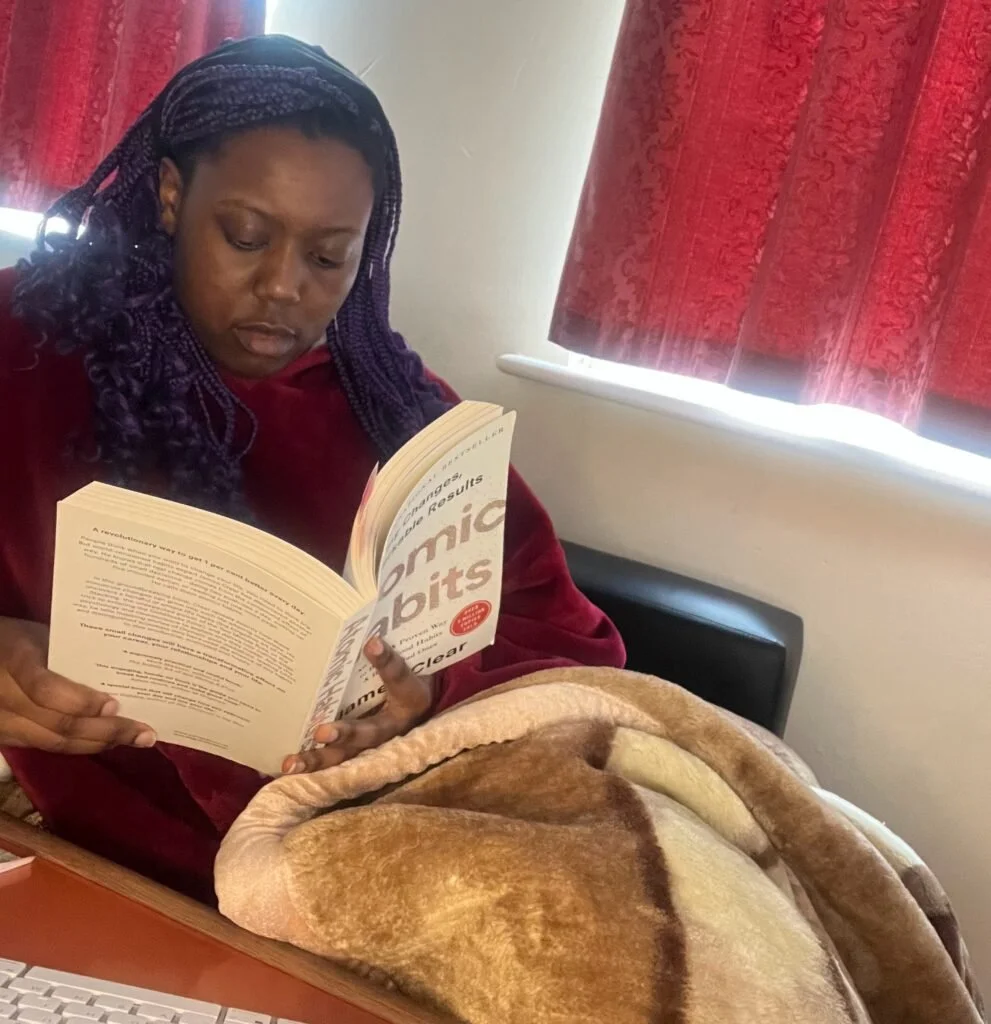
Me reading Atomic Habits by James Clear, ft my little tabs
What are self help books?
These are books that inform you about lots of research done on the body and mind, to help you look into yourself, and learn about yourself more. The reasons why you might read these books, is purely personal. Some people read for the genuine curiosity to understand themselves and the humans around them. Others are purely to manage themselves better in society. Maybe some people just read these books to sound smart. Hey, we can’t judge what people read, let’s just be grateful the art of reading is not lost, regardless of the motivations.
The categories of self-help further branch out into psychological areas, the physical body (which can be broken down into specific body parts and even organs and systems), and social areas. The 3 can overlap, but I think most self help books can fall within 1 or all three of these.
How to use a self help book
Unlike books that are read for fun, and to escape reality, I don’t believe all self help books are meant to be kept and re-read. That’s just because these books are better perceived as mini guides, because figuring out your body, others and society is best done in practise. The data in those books will always be behind what is currently existing in front of you. On top of that, implementing what you have learnt in those books isn’t always possible. So you could keep going back to that book and re-reading the same sentences, and nothing changes. Because the book can’t tailor its words to your situation, and sometimes your situation is so extreme it falls beyond the average bounds explored in those books. So again, you can use them as a guide, but it’s not a step-by-step instruction manual.
Step 1:
Read the book, and note key sentences that linger with you. I like to use little tabs, and stick them on the page. Or if I am listening to an audiobook, I note the sentence down in my notes, (or use the highlight function in my kindle).
These are things that bring insight to your thinking, or small nuggets of advice that could be useful to implement in your life now.
Step 2:
As I read through the book, I am assessing if the tips in the book are applicable to my life, and if I can make those changes. For example, I read Atomic Habits, and through reading that I decided to join the 5 am club (wake up at 5 am to start my day). I was part of that club for 4 months. That was in 2022. I haven’t been part of that club since. But there are still key lessons I took from the book, but maintaining my membership in the 5 am club, was just not sustainable. And that’s ok. We are not all going to be part of the 5 am club. And that’s fine.
Step 3:
I put the words from the book and the parts that link closely to my life into practise. It’s a self-help book, the aim is to improve myself. And reading the book is step 1 to inform me. But step 3 is to implement the things I have identified that can be applied to my life (step 2).
Step 4:
Give it time and practise. Once you have read the book it doesn’t mean you have automatically upgraded yourself to be a better human in society. It just means you read a book, like the rest of us. But putting what you have learnt and taken from the book into practise, and maintaining that practise, is the key to showing the benefit of reading the self-help book. There is the normal saying that it takes 10,000 hours to implement a habit. So if you want ‘being an improved version of yourself’ to be habitual, you have to put in that practise.

To be fair, I only look this cosy when reading fiction books
Why you should read a self help book
Don’t read it because someone told you to. These books are blunt and the purpose of them is to make you look introspectively at yourself. So if someone says ‘hey you should read this book’ and it’s a self help book, and those first 10 chapters are highlighting key areas that you are presenting some flaws in. All it will do is make you feel terrible. And for some people that’s enough to encourage the change, but that’s not all of us. Never read a self help book on a person’s recommendation. Because you will take offense to them suggesting it to you. (Trust me I have done that, I did not enjoy it. In fact I still haven’t finished a book recommended to me, and I don’t plan to for a few more months).
The reason I read Atomic habits, is because I wanted to build habits that improved myself. I wanted that achievement for myself. The aim was to build habits, that when I looked back on a year or more, I could see how far I have come. As you can see, the motivation was truly selfish, in that I wanted that for myself. None of it was based on other people’s views of me. And all the self help books (bar the 1 recently) have all been intrinsically motivated to be read.
The book I took the recommendation from, was The Chimp Paradox, and it was from a work colleague. I believe they did it, because they think I am not able to manage my emotions. And it took me to over half way of the book to realise, they had only seen me in situations where my emotions were high. Because we are in work, we have a difficult colleague, who everyone chooses to manage differently, and when I am not around that colleague I let my frustrations out in the form of a rant. Reading that book I was so confused, because about 90% of what the author was saying, is things I do, but to the person who recommended it, I don’t do those things. Which is fair, but I took that recommendation, without considering how they saw me. I took offense those first 5-10 chapters, before it clicked.
When you should read self-help books
Technically whenever you want, within reason. Some self -help books have active homework that you need to do. So you need to pick a time where you have the time and ability to do the work in the book. Because the self-improvement will not happen if you don’t apply it to your life.
You also need to be in the right head space. Almost certainly, anyone who has read a self-help book, will feel called out on their behaviours. And if you are not in a great headspace, you can take offense, get upset, feel attacked, and that’s not a great reading experience.
So, ideally, you need a clear neutral mind and emotions. You need to be focussed to implement the little homework tasks, and take the time to really think about the lessons you are taking from the book. Most of the time when I read a self help book, it’s as an audio when I am on a walk. Where my brain is clear, and I am able to focus on what’s playing in my ears. When reading the physical ones it’s normally before bed, where I also do some night reflections before I sleep.
TLDR;
- Reading self-help books to help improve yourself and lifestyle, is very normal and responsible to do, since they are based on a lot of research
- It’s good to use self-help books as mini guides, rather than instruction manuals, because they won’t be able to tailor things to your life specifically, so take and implement and practise what you can from them.
- Never read a self help book on a recommendation from anyone (even your friends) – trust me, those books are written to call you out, and you will get offended. Pick on up on your own terms and when you are ready to embark on that self-improvement journey.
- It’s best to read a self-help book, when your mind is clear, you are not busy so you can do the little tasks, and your emotions are neutral enough to not take offense when the book calls you out.
*Please not this post contains some affiliate links, if you click on them and make a purchase I may get a commission.
Bonus – List of self help books I have read
Atomic Habits – literally helped me get to grips with how my brain handles habits and routine, and has allowed me to build the routines that I lead in my life now, with as little burn out as possible.
Show your work – Helped me in the earlier days of the blog to have to confidence to share my work, and my content
The Subtle art of not Giving a F*ck – Reminded me how short our lives our in comparison to earths life, and how insignificant so many things are, that we worry about
Everything is F*cked – Reminded me that there will always be problems, but how I handle them is whether the problem persists or not
Financial Feminist – Tory provides non-qualified advice on finances based on her experience and education (though she is not a qualified finance and investment person so always seek professional consult), but she explains it in ways that is easier to understand than the more qualified people would.
Feel good productivity – Ali helped me think about how I feel around productivity, and helped me think of systems to make my productivity more optimised to fit my routines.
The Chimp Paradox (read ~ 70% so far) – This helped me recognise the emotional side of our brains more. The last 30% is giving ways to me be more productive, so when I am ready to implement that, I will finish the book.
